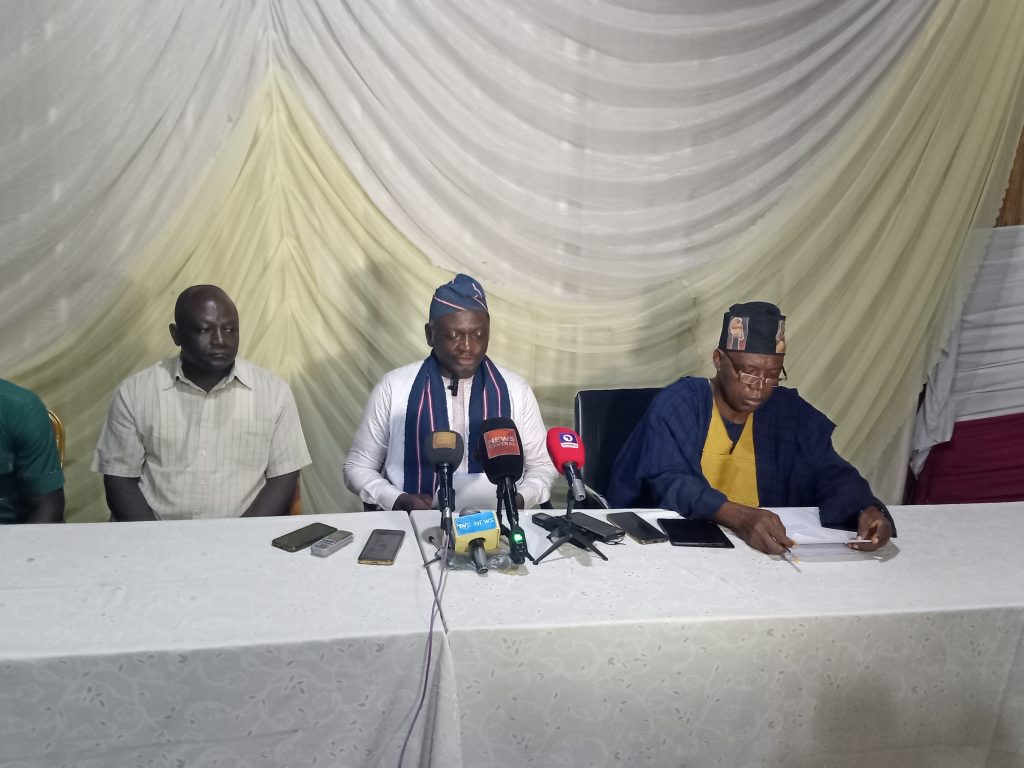
The Conference of Autochthonous Ethnic Nationalities Community Development Associations (CONAECDA) has declared that the President of Nigeria has no constitutional powers to force political office holders on any section of the country, insisting that the choice of leaders remains the exclusive right of the electorates.
The group also defended the constitutional and historical position of indigene rights in Nigeria, arguing that only native communities are entitled to indigene certificates issued by local government authorities across the federation.
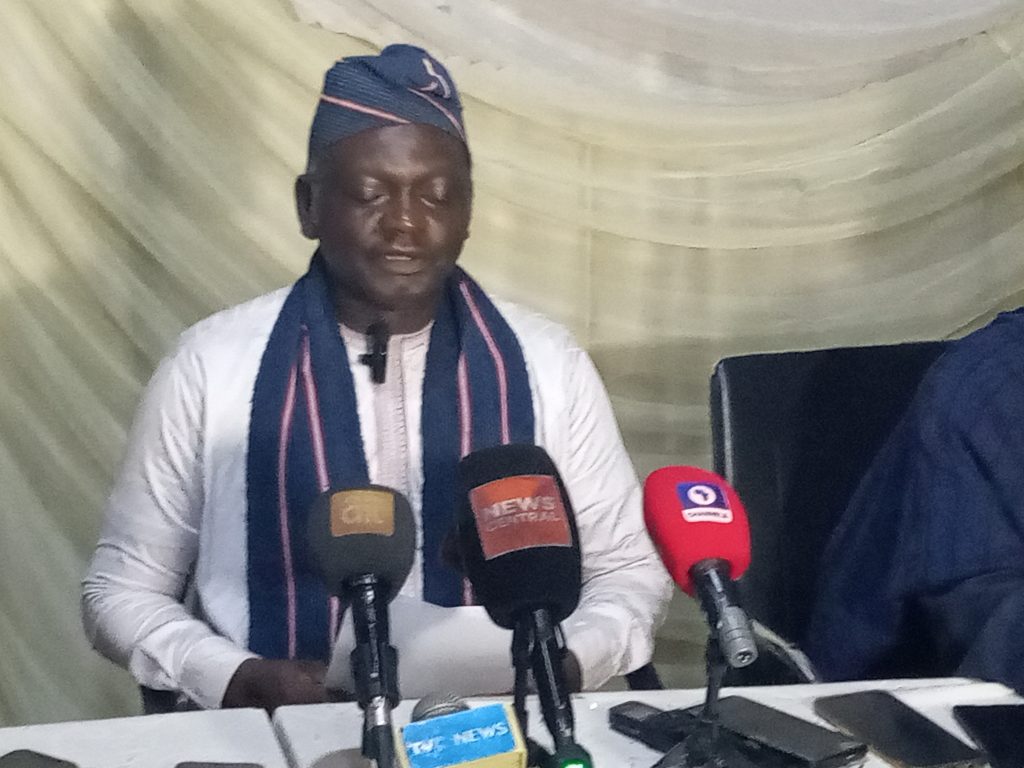
Speaking during a press conference in Jos, the Plateau State capital on Monday, the Secretary General of CONAECDA, Suleman Sukukum, said political inclusion in Nigeria must be guided by constitutional provisions and democratic processes rather than external interference.
According to him, the Constitution of the Federal Republic of Nigeria grants every citizen the right to contest political offices anywhere in the country, but such aspirations can only succeed through the support of voters not by imposition.
“The President has no constitutional powers to force the choice of political office holders on any section of Nigeria and this also applies to Plateau State,” Sukukum stated.
The group maintained that non-indigenes have historically contested and won elections across Nigeria, including Plateau State, whenever they earned the confidence of the electorates.
CONAECDA further argued that debates surrounding indigene-settler issues had long been addressed through the recognition of native tribes, native lands, native rights and traditional institutions dating back to the colonial era.
The association said local governments and traditional councils remain the legally recognized bodies responsible for issuing indigene certificates nationwide, insisting that Plateau State and the Middle Belt should not be treated differently.
The organization also called on communities that feel politically marginalized to organize democratically and reclaim political power through elections, while urging the Independent National Electoral Commission (INEC) to guarantee free and fair polls ahead of the 2027 general elections.
On the nation’s security situation, CONAECDA expressed concern over rising attacks and terrorist activities across states including Benue, Plateau, Niger, Nasarawa, Taraba, Borno, Adamawa, Kaduna, Kwara and Kogi.
The group alleged that forests and grazing reserves across the country now host active or sleeper terrorist cells, warning of increasing security threats, particularly around the Federal Capital Territory.
The association condemned all forms of killings, stressing that every human life is sacred regardless of religion or ethnicity and called on President Bola Ahmed Tinubu to intensify efforts towards rehabilitation of victims, reconstruction of destroyed communities and protection of displaced persons.
CONAECDA expressed support for the Nigerian Armed Forces and other security agencies while commending the United States Government for efforts aimed at assisting Nigeria to tackle insecurity.
As part of its resolutions, the association declared the last Thursday of every month as “Black Thursday” to honour victims of violence and promote the protection of lives across the country.
The organization also condemned what it described as the growing conversion of sacred hills and groves into grazing areas in parts of the Middle Belt, calling for urgent intervention by communities, conservation agencies and the international community.
On religious freedom, CONAECDA decried alleged cases of forced abductions, conversion and child marriage involving minors, urging authorities to strengthen the protection of children’s rights and to establish a Religious Rights and Equities Commission.
Looking ahead to the 2027 general elections, the group warned against anti-democratic practices by political parties and politicians, urging community leaders and citizens to actively participate in candidate selection, voter education and election monitoring.
About The Author


More Stories
Gov. Mutfwang Congratulates Dorcas Gwani, as New NUJ Correspondents’ Chairperson
PLATEAU GOVT CONDEMNS ATTACK ON TRADERS RETURNING FROM KARA MARKET, ORDERS PROBE
Gov. Mutfwang Pardons 130 Inmates, Commutes 4 Death Sentences on Independence Day.