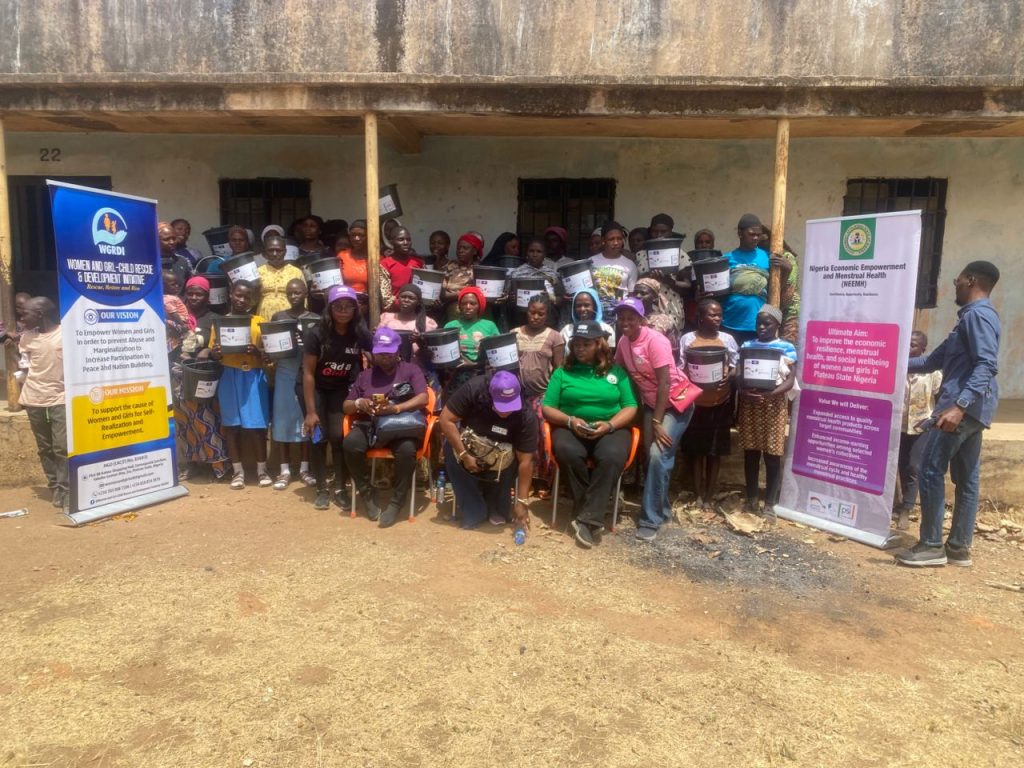
Population Services International (PSI) Nigeria has commemorated the 2026 International Women’s Day with a menstrual health outreach to women and girls at the Internally Displaced Persons (IDP) Camp in Riyom local government area of Plateau State.
The outreach, organised under the Nigerian Economic and Empowerment Project on Menstrual Health, funded by the German Development Agency (GIZ), was carried out in collaboration with the Women and Girl Child Rescue and Development Initiative (WGRDI) and the Plateau State Ministry of Women Affairs and Social Development (MOWASD).
The programme which was held on Monday, focused on educating women and girls on menstrual health and hygiene, with facilitators highlighting the various types of menstrual products available for safe and healthy menstrual management.
Participants were also taken through a practical demonstration on the proper use of reusable menstrual pads. The reusable pads formed part of dignity kits distributed to about 50 women at the camp.
Speaking during the outreach, the Director of Women Affairs at the Ministry of Women Affairs and Social Development, Mrs. Maureen Dakim, commended PSI Nigeria for the initiative and noted that many women and girls still have limited knowledge about menstruation despite it being a natural biological process.
Dakim said the project aligns with the ministry’s commitment to ensuring that every woman and girl can manage her menstrual cycle with pride, dignity, and adequate support.
Also speaking at the event, the Executive Director of WGRDI, Ambassador Bridget Dakyes, said the theme of the International Women’s Day 2026, “Give to Gain,” reflects the objective of the outreach.
According to her, providing women with access to affordable menstrual products and knowledge on menstrual health empowers them to participate fully and contribute meaningfully to society.
One of the beneficiaries expressed appreciation for the initiative, revealing that before the outreach she relied on using rags during her monthly cycle because she could not afford menstrual products.
“With the knowledge I have gained today, I now understand how to maintain proper menstrual hygiene and how to guide my daughters when they begin their menstrual journey,” she said.
The outreach underscored the importance of menstrual health education and improved access to menstrual products as critical steps toward promoting the dignity, health, and empowerment of women and girls, particularly in vulnerable communities.
About The Author



More Stories
Plateau: NEWSAN Engages Stakeholders on Safe Water, Sanitation, Hygiene
Plateau State University prioritizes Mental Health, Suicide Prevention Care
Cholera Outbreak: Plateau State Government takes Preventive Measures