Timothy Alamba Madu
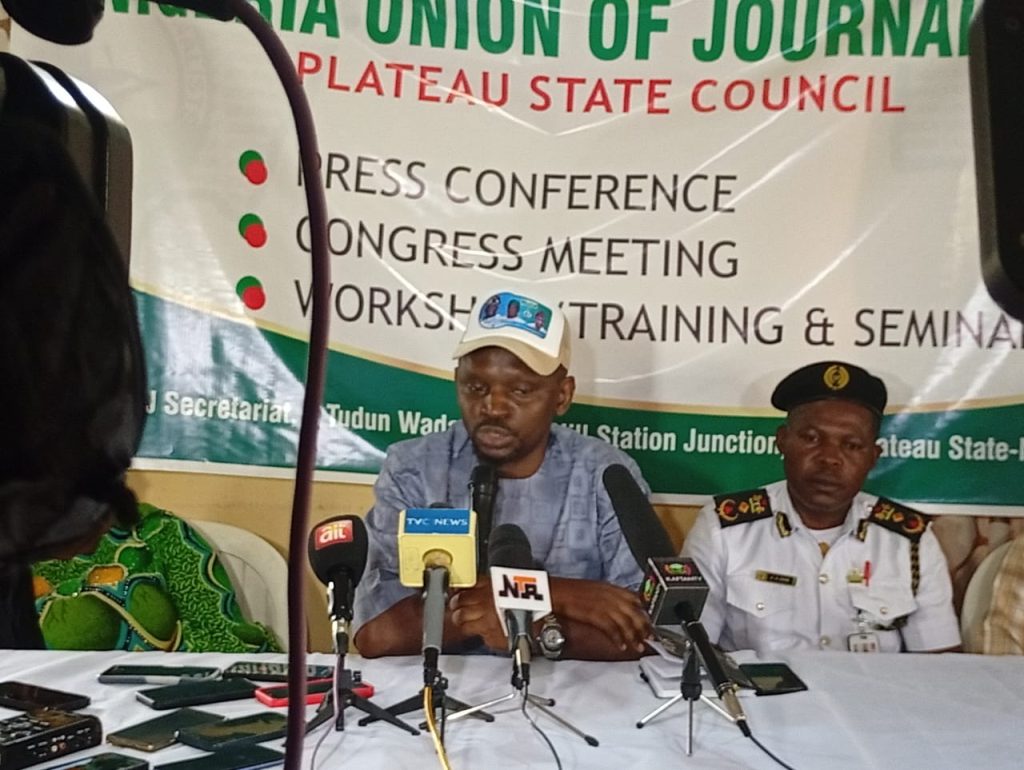
The Plateau State Commissioner for Transport, Mr. Davou Gyang Jatau, has said the Vehicle Inspection Officers (VIO) are not a revenue-generating agency and are not on the roads to make money.
He spoke at the State NUJ Press Centre, Jos, while answering questions from journalists on the conduct of the VIO, vehicle testing and transport reforms.
“They are not a revenue-generating agency,” he said. “That’s not their sole responsibility.”
To explain his position, Mr. Jatau compared the work of the VIO to that of the courts. A person found guilty in court is sentenced, he said, and a motorist who breaks the law on the road pays a fine.
Fines are heavy on purpose, he added. The weight is meant to push offenders to do the right thing and avoid another fine. He stressed that officers do not collect fines and put them in their pockets.
In his words, the VIO are there to “check the wrongs and the rights.” Their duty is to inspect vehicles and confirm they are roadworthy.
Not everyone in the room agreed. One journalist argued that the main reason the VIO are on the road is to raise money for government.
The commissioner held his ground. “I am still telling you the primary responsibility is not to generate revenue,” he said. If a vehicle fails the standards, the owner pays a fine. “Simple.”
He then backed his argument with a personal story. Mr. Jatau said his four-year driver’s licence expired on September 13, his birthday, without his knowledge.
Officers flagged him down and showed him the expiry date. He said he did not tell them who he was. When some officers recognised him and urged him to go, he refused.
“I committed an offence. I drove without a valid driver’s licence,” he said. He paid the fine and began the renewal process. He showed journalists the temporary licence he collected two days earlier.
It was not his first stop. On another occasion, he said, officers found an expired tyre and fog lights that could cause accidents. He asked to be booked for every offence.
While defending the officers’ duty, the commissioner drew a clear line between a fine and extortion. On officers who collect money without receipts, he said: “That is criminal, sir.”
He urged the public and the media to report any such officer to him. Offenders will face civil service discipline first, and then prosecution for extortion.
“If you still have that one and nothing has been done, bring it back to us,” he said.
Mr. Jatau also admitted that the VIO have their own excesses. He said he has told officers that not every offence calls for a fine, and that simple errors can be explained to the motorist.
An internal review of a committee report found faults on both sides, he said. The ministry has identified gaps in staffing, training and retraining, and has written memos to the Head of Service and other agencies.
On the question of legality, he said a court judgment against the VIO applies only to the Federal Capital Territory. None exists against the VIO on the Plateau, he said.
“If you have it, I want it,” he told journalists.
Turning to how vehicles are checked, the commissioner said motorists in Jos can drive into the VIO testing ground, where a machine scans the whole vehicle for N2,500. The result is automatic and cannot be changed by humans, he said.
Commercial vehicles must be tested twice a year and other vehicles once a year. On the road, officers also check basic accessories such as a fire extinguisher.
Looking ahead, Mr. Jatau said he is in talks with the Chairman of the Internal Revenue Service on an electronic system for checking vehicle particulars. He added that Road Safety should send licence-expiry reminders, just as banks and telecom firms send birthday wishes.
He said the state is also working on electronic geo-fencing and time-fencing for tricycles, to keep them off highways and shut them down after 6pm.
Beyond enforcement, the commissioner said the state is also working to make travel cheaper. A return trip of 46 kilometres costs just N400, he said, adding that no other state matches it.
On compressed natural gas (CNG), he said the state has signed a pact with the National Institute of Transport Technology, Zaria, to set up a vehicle conversion centre in Jos. The lack of refuelling stations remains the main challenge, he said.
He described the President’s October 1 deadline as not feasible, “but I believe also in miracles.”
VIO Not on Our Roads for Money, Says Plateau Commissioner
By Timothy Alamba Madu
The Plateau State Commissioner for Transport, Mr. Davou Gyang Jatau, has said the Vehicle Inspection Officers (VIO) are not a revenue-generating agency and are not on the roads to make money.
He spoke at the State NUJ Press Centre, Jos, while answering questions from journalists on the conduct of the VIO, vehicle testing and transport reforms.
“They are not a revenue-generating agency,” he said. “That’s not their sole responsibility.”
To explain his position, Mr. Jatau compared the work of the VIO to that of the courts. A person found guilty in court is sentenced, he said, and a motorist who breaks the law on the road pays a fine.
Fines are heavy on purpose, he added. The weight is meant to push offenders to do the right thing and avoid another fine. He stressed that officers do not collect fines and put them in their pockets.
In his words, the VIO are there to “check the wrongs and the rights.” Their duty is to inspect vehicles and confirm they are roadworthy.
Not everyone in the room agreed. One journalist argued that the main reason the VIO are on the road is to raise money for government.
The commissioner held his ground. “I am still telling you the primary responsibility is not to generate revenue,” he said. If a vehicle fails the standards, the owner pays a fine. “Simple.”
He then backed his argument with a personal story. Mr. Jatau said his four-year driver’s licence expired on September 13, his birthday, without his knowledge.
Officers flagged him down and showed him the expiry date. He said he did not tell them who he was. When some officers recognised him and urged him to go, he refused.
“I committed an offence. I drove without a valid driver’s licence,” he said. He paid the fine and began the renewal process. He showed journalists the temporary licence he collected two days earlier.
It was not his first stop. On another occasion, he said, officers found an expired tyre and fog lights that could cause accidents. He asked to be booked for every offence.
While defending the officers’ duty, the commissioner drew a clear line between a fine and extortion. On officers who collect money without receipts, he said: “That is criminal, sir.”
He urged the public and the media to report any such officer to him. Offenders will face civil service discipline first, and then prosecution for extortion.
“If you still have that one and nothing has been done, bring it back to us,” he said.
Mr. Jatau also admitted that the VIO have their own excesses. He said he has told officers that not every offence calls for a fine, and that simple errors can be explained to the motorist.
An internal review of a committee report found faults on both sides, he said. The ministry has identified gaps in staffing, training and retraining, and has written memos to the Head of Service and other agencies.
On the question of legality, he said a court judgment against the VIO applies only to the Federal Capital Territory. None exists against the VIO on the Plateau, he said.
“If you have it, I want it,” he told journalists.
Turning to how vehicles are checked, the commissioner said motorists in Jos can drive into the VIO testing ground, where a machine scans the whole vehicle for N2,500. The result is automatic and cannot be changed by humans, he said.
Commercial vehicles must be tested twice a year and other vehicles once a year. On the road, officers also check basic accessories such as a fire extinguisher.
Looking ahead, Mr. Jatau said he is in talks with the Chairman of the Internal Revenue Service on an electronic system for checking vehicle particulars. He added that Road Safety should send licence-expiry reminders, just as banks and telecom firms send birthday wishes.
He said the state is also working on electronic geo-fencing and time-fencing for tricycles, to keep them off highways and shut them down after 6pm.
Beyond enforcement, the commissioner said the state is also working to make travel cheaper. A return trip of 46 kilometres costs just N400, he said, adding that no other state matches it.
On compressed natural gas (CNG), he said the state has signed a pact with the National Institute of Transport Technology, Zaria, to set up a vehicle conversion centre in Jos. The lack of refuelling stations remains the main challenge, he said.
He described the President’s October 1 deadline as not feasible, “but I believe also in miracles.”
About The Author


More Stories
PSI-Nigeria Commends CSOs for Impactful Implementation of NEEMH Project in Plateau.
Irigwe Youths Appeals To Gov. Mutfwang To End Their 11 Years Of Blackout
PIDAN Retreat: Plateau Leaders Push Unity, Peace and Responsible Mining