
Governor Caleb Mutfwang of Plateau State has flagged off the construction of a modern 500-cattle-per-day automated abattoir at the Heipang Special Agro-Processing Zone (SAPZ), describing it as a major milestone in Plateau State’s economic transformation through livestock development and agro-industrialization.
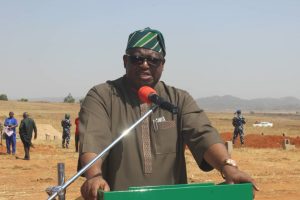
Speaking during the groundbreaking ceremony in Heipang, Barkin Ladi Local Government Area, Gov.Mutfwang said the project goes beyond meat processing and represents a strategic investment aimed at creating jobs, attracting industries, and expanding economic opportunities.
The Governor noted that the facility would replace crude and unhygienic slaughter methods with a modern processing system that meets international standards and positions Plateau as a leading livestock processing hub in Nigeria and West Africa.
He explained that his administration is prioritizing agro-processing and value addition, stressing that economies grow faster when raw agricultural products are processed into higher-value goods.
According to the Governor, the abattoir will serve as the foundation of an integrated livestock economy linking farmers, herders, veterinarians, transporters, feed producers, processors, leather manufacturers, dairy entrepreneurs, and exporters.
He said every animal processed at the facility would generate multiple economic benefits, including meat production, leather processing, animal feed ingredients, organic fertilizers, bio-energy, packaging, transportation, and export opportunities.
He projected that the initiative would create thousands of direct and indirect jobs while boosting the State’s internally generated revenue through processing fees, taxes, and exports.
Gov.Mutfwang emphasized that the administration’s goal is to ensure that every stage of the livestock value chain benefits Plateau residents, from feed crop farmers to entrepreneurs operating cold rooms, dairy collection centres, and processing facilities.
He disclosed that the abattoir is situated within the 500-hectare Heipang Special Agro-Processing Zone, which is expected to attract investments in cold storage, leather tanning, feed production, and packaging industries.
Addressing public misconceptions, he said livestock development extends beyond cattle ownership, noting that profitable opportunities exist in feed production, dairy farming, transportation, and processing activities.
He encouraged households and small-scale farmers to embrace dairy production, stating that keeping a manageable number of animals for milk production can provide sustainable income and improve family nutrition.
The Government also announced plans to promote modern feedlot systems and commercial fodder production, highlighting forage cultivation, hay production, silage, and pasture seed development as lucrative agricultural ventures.
Calling for wider participation, he urged investors, development partners, financial institutions, livestock producers, and local communities to support the project, assuring that it would be completed on schedule.
In his remarks, Minister of Livestock Development, Alhaji Idi Mukhtar Maiha described Plateau as well positioned to lead Nigeria’s livestock transformation due to its favourable climate, resilient farming communities, strategic transport links, and strong animal health services.
Also speaking, Dr. Sunday Akpa, the State Commissioner for Livestock Development, Veterinary Services and Fisheries, and Hon. Samson Bugama, Commissioner for Agriculture and Rural Development all described the project as a historic milestone that would drive exports, industrialization, foreign exchange earnings, and wealth creation while establishing Plateau as a major destination for livestock investment.
About The Author


More Stories
Cooperative Federation of Nigeria Tasked To Deepen Impact At 10th National Summit.
VIO Not on Our Roads for Money, Says Plateau Commissioner
PSI-Nigeria Commends CSOs for Impactful Implementation of NEEMH Project in Plateau.