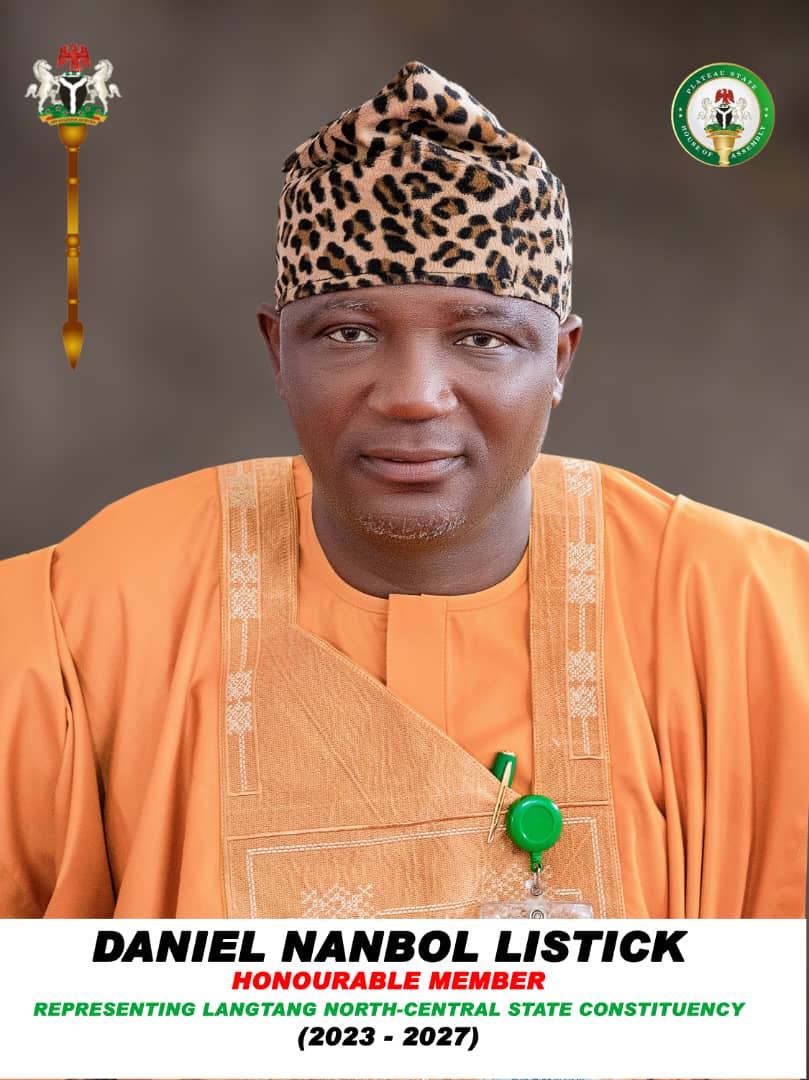
Pastor Daniel Nanbol Listick
(Public Theologian and State Representative).
INTRODUCTION: Plateau State with its rich soil, diverse cultures, and spiritual heritage, stands as both gift and a responsibility. In the face of current climate change, the Public Theology call to stewardship of this sacred soil becomes urgent. Public theology, rooted in Biblical love, offers a framework for engaging ecological crises not merely as technical challenges but as moral and spiritual concerns. Hence the need to view climate change through the lens of Biblical love.
Beloved people of Plateau State, our environment is not merely a backdrop for existence, it is the very fabric of identity, economy, and faith. However, as shifting weather patterns, unpredictable harvests, and ecological degradation takes hold, climate change has evolved from a scientific observation into a profound theological crisis. As I make an attempt to address climate change through the lens of Biblical love (Agapé), I am deeply convinced that it will go a long way in transforming environmental stewardship from a secular policy issue into a core mandate of public theology.
PLATEAU STATE AS SACRED SOIL: The Plateau is more than geography; it is sacred soil, imbued with memory, culture, and divine presence. To desecrate it through neglect or exploitation is to wound the spiritual identity of its people. Stewardship here is a form of reverence recognizing that the land itself participates in God’s covenant with creation.
CLIMATE CHANGE AND THE FRAGILITY ON THE PLATEAU: The Plateau region, like many parts of Nigeria, is experiencing the destabilizing effects of climate change: erratic rainfall, soil erosion, desert encroachment, and declining agricultural yields. These changes threaten food security, livelihoods, and the delicate balance between human communities and the land. The soil, once fertile and sustaining, is increasingly vulnerable to degradation. Stewardship here is not abstract, it is about protecting the very ground that sustains life. Our soil, economy, and even our culture are facing the reality of climate change. On this note, it is our corporate responsibility to prevent climate change as we demonstrate Biblical love in creation care to our neighbors.
BIBLICAL LOVE AS ECOLOGICAL ETHIC: Biblical love, expressed in the command to “love your neighbor as yourself” (Mark 12:31), extends beyond interpersonal relationships to encompass care for creation. The soil is not inert matter; it is the medium through which God’s provision flows. To degrade the land is to harm our neighbor, for it diminishes their capacity to live with dignity. Stewardship of the soil thus becomes an act of love protecting the commons so that future generations may flourish.
The Genesis mandate to “till and keep” the garden (Genesis 2:15) frames humanity’s role as caretakers, not exploiters. This ethic resists the temptation to treat the Plateau’s resources as commodities for short-term gain, insisting instead on sustainable practices that honor God’s creation. This is part of my concern that our people should be exposed to the practice of stewardship of the sacred soil and Biblical love.
PUBLIC THEOLOGY CALL AND THE COMMON GOOD: On the Plateau, where the beauty of the rock formations and the fertility of the volcanic soil are seen as divine blessings, environmental degradation is a form of spiritual negligence. Public Theology insists that faith must speak in the public square, addressing issues of ecology, justice, and governance. This simply means that churches, relevant institutions and civic institutions must collaborate to articulate a vision of ecological justice. Stewardship of the soil is not only a private spiritual discipline but a public responsibility.
On this note, I call on the peace loving people of Plateau State and my fellow leaders to integrate ecological concerns into policy, education, and community life. It challenges extractive practices, advocates for climate adaptation strategies, and promotes indigenous knowledge systems that respect the rhythms of the land. By grounding these efforts in Biblical love, Public Theology platform will go a long way to transform environmental activism into a moral imperative. NOW THERFORE, I humbly make this Public Theology call as follows:
- Ecological Discipleship: Plateau people should organize teachings that planting a tree or reducing waste is a spiritual discipline.
- Advocacy: We should conduct advocacy challenging mining practices that leave the Plateau landscape scarred and toxic.
- Resilience: We should build community silos and support climate smart agriculture as an expression of communal love.
CONCLUSION: Stewardship of the sacred soil of Plateau State requires a convergence of ecological awareness, Biblical love, and public theology. Climate change is not merely an environmental crisis but a spiritual test of our capacity to love God, neighbor, and creation. By embracing sustainable practices, advocating for ecological justice, and treating the soil as sacred, communities on the Plateau can embody a theology of hope, one that nurtures life, honors God, and safeguards the future. Climate change is also the defining moral challenge of our era. It is an invitation to rediscover the depth of Biblical Love. By viewing the environment through a theological lens, we realize that saving the planet is actually about loving our neighbors and honouring our Creator. As we stand on the heights of the Plateau, our Public Theology must be as rugged and enduring as the hills themselves rooted in the soil, fueled by love, and committed to a future where both the land and its people can flourish in peace.
About The Author


More Stories
Plateau Lists Strides In Greater Jos Master Plan, Riyom, Mangu, Heipang Town Plans
Gov. Cuts Land Title Processing From 46 To 25 Stages in Plateau
Plateau Blocks Revenue Leakages In Land Sector, Commissioner Admits Lingering Challenges